

A crypto wallet is a digital wallet for sending, receiving, and storing cryptocurrencies. This article explains how a crypto wallet works, the differences between wallets, and the risks associated with using them. This article is intended as an unbiased and informative guide for novice users who want to understand how a crypto wallet works before getting started.
Table of Contents
What is a crypto wallet?
A crypto wallet is a digital wallet for sending, receiving, and storing cryptocurrencies. A crypto wallet allows you to manage cryptocurrencies without third-party control (also known as self-custody).
A crypto wallet can be:
- 📱 An app installed on a mobile device
- 💻 A program installed on a computer
- 🌐 An add-on installed on a web browser
- 🔐 A physical device (hardware wallet)
Below is an image of the popular Exodus mobile wallet. One could say that a crypto wallet’s user interface often resembles an online banking app.
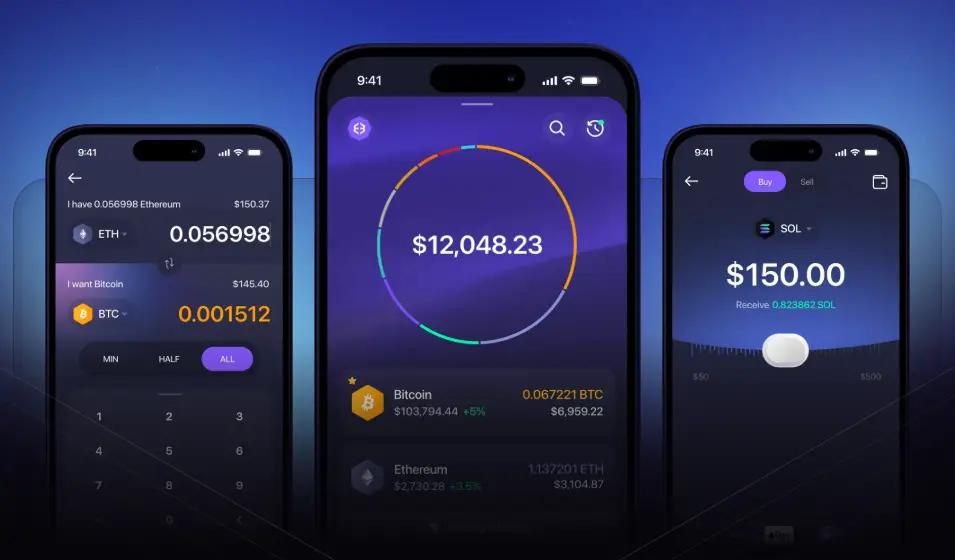
The first three wallets listed above are so-called hot wallets. A hardware wallet is a cold wallet.
A hot wallet is a wallet that is connected to the internet, while a cold wallet is kept offline. A cold wallet is connected to the internet solely during transaction confirmation.
Hot wallets are typically free. Cold wallets cost from tens to hundreds of dollars, depending on the model.
A crypto wallet allows you to manage cryptocurrencies at a specific blockchain address. Many wallets can also combine funds from multiple addresses into a single balance. A crypto wallet essentially provides a graphical user interface to the blockchain. Without a wallet software, sending cryptos would be very difficult for an ordinary user.
Cryptocurrencies are on the blockchain – not in the wallet
A distributed database serves as a data storage for all cryptocurrencies. The best-known distributed database is blockchain, which is used by most well-known cryptocurrencies (including Bitcoin). A blockchain stores information about how many coins are stored in a specific crypto address and who has the right to control it.
Crypto wallet is, therefore, a somewhat misleading term, as it does not store cryptocurrency. A crypto wallet actually contains the keys needed to manage coins at a specific address.
The following examples help you understand how a crypto wallet functions.
- 👝 A physical wallet can contain banknotes and coins. If your wallet is lost, you lose its contents.
- 📱 A bank’s mobile app gives you access to your bank account. Even if you delete the mobile app from your phone, you will not lose the funds in your bank account.
The operating logic of a crypto wallet is somewhat similar to that of your bank’s mobile app. A crypto wallet provides an interface to your crypto assets in the blockchain. Even if you lose your phone or accidentally delete your wallet app, your cryptocurrencies are still in the blockchain.
Your crypto assets are stored on a distributed ledger, replicated across all servers that maintain it. You need wallet software to let other participants know that you control the funds associated with a specific address.
A crypto wallet is only needed when sending crypto. You can receive crypto at any time in your wallet by giving the address to the other party. You do not need to confirm the incoming transfer in your wallet app.
The recovery phrase is the most important part of a crypto wallet
Using a crypto wallet requires care to keep its contents safe from cybercriminals. Every crypto wallet user becomes familiar with its most important part, the recovery phrase, when they initialize a new wallet. The terms seed phrase, backup words, and recovery keys are also used.
A recovery phrase consists of English words, such as puzzle, oxygen, crumble, luxury, and whisper. There are either 12 or 24 words in one recovery phrase. These words are generated (in a specific order) when the crypto wallet is initialized.
Below is a picture of the note that comes with the Ledger cold wallet, where you can write your recovery phrase (24 words.

The recovery phrase is the most important part of your crypto wallet because it allows you to re-initialize it. In other words, if someone else gets their hands on your recovery phrase, they could clone your crypto wallet and steal its contents.
Storing your recovery phrase properly is crucial. Under no circumstances should you store your recovery phrase online or on a device connected to the internet. For example, in a cloud service, on your computer, or on your mobile device.
⚠️ Recovery phrase should be stored on paper or on a metal backup disk. Never as an image or text file on your computer or mobile device. ⚠️
You will also need your recovery phrase in case you lose access to your crypto wallet. For example, if your computer or phone breaks down. Sometimes a cold wallet can also malfunction. In such cases, you can re-initialize your wallet on a new device.
Different types of crypto wallets
Next, let’s go through the different types of crypto wallets. We are now discussing so-called non-custodial wallets. This means a crypto wallet that is fully under the user’s control. Cryptocurrencies can also be stored in a custodial wallet at a crypto exchange, but this option will be discussed in the next chapter.
Mobile wallet
A mobile wallet is the most popular type of crypto wallet. Most crypto investors currently use crypto exchanges and other services (e.g., DeFi and crypto games) on a mobile device.
A mobile wallet is an app installed on a mobile device. All known mobile wallets have both iOS and Android versions.
Popular mobile wallets include:
- Trust Wallet
- Exodus
- MetaMask
- Phantom
The user interface of a mobile wallet is similar to that of an online banking application. Below is an image of Trust Wallet, one of the most popular mobile wallets.

Popular mobile wallets support the most well-known blockchains and hundreds of different cryptocurrencies. So you don’t need a different app for each cryptocurrency.
A mobile wallet is a type of hot wallet, because your mobile device is constantly connected to the internet. It is not the optimal security solution.
However, the development of mobile technology has made mobile wallets increasingly secure. If your smartphone supports biometric identification, no one can open your mobile wallet, even if your phone is lost.
Another strength of a mobile wallet is its support for QR code scanning. When you send crypto or make a payment from your mobile wallet, you can directly scan the QR code describing the recipient’s address. This way, you don’t have to use the copy-paste function and avoid errors when entering the address.
A mobile wallet is well-suited for daily use and storing smaller amounts.
A desktop wallet
A crypto wallet can also be a program installed on a computer. Such crypto wallets are called desktop wallets.
Popular desktop wallets include:
- Exodus
- Coinomi
- Atomic Wallet
- Guarda Wallet
The wallets listed above are examples of wallets that support hundreds of cryptocurrencies. In addition, there are some crypto-specific wallets available. These include the Electrum Bitcoin wallet and the Monero GUI wallet.
Below is a picture of the Atomic Wallet user interface.
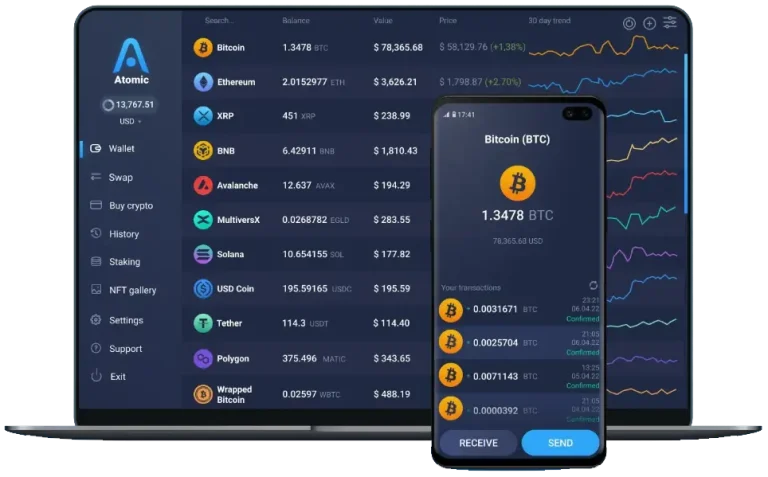
A wallet installed on a computer and a mobile wallet are mostly on the same level from a security perspective. Both are hot wallets, because your computer is also constantly connected to the internet. However, a computer is not always with you, unlike a mobile device, which reduces the risk of theft or loss.
The choice between a desktop wallet and a mobile app is largely a matter of preference. Some crypto investors want to use wallets and other crypto apps on a computer, while others prefer a smartphone. You can choose the option that you find more comfortable to use.
Browser extension
A crypto wallet can also be a browser extension. A browser extension is an add-on that is installed on a web browser. Most of such wallets are Google Chrome add-ons, as Chrome is by far the most popular web browser.
Browser extensions are almost always used on a computer. If you have a mobile device, use the native app instead.
Popular browser extensions include:
- Metamask
- Phantom
- Trust Wallet
- Brave Wallet
The user interface of browser extensions resembles either a mobile app or desktop software, depending on the wallet. Below is a picture of Metamask.
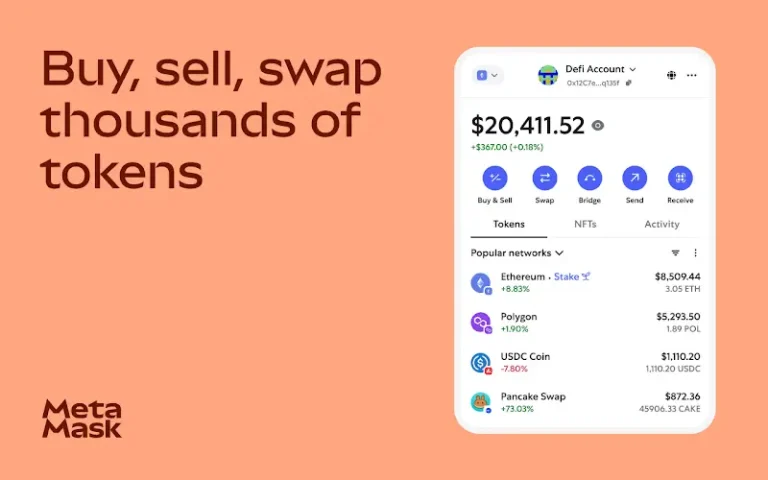
A browser add-on is also a hot wallet, because your web browser is constantly connected to the internet. From a security perspective, it is roughly on the same level as software installed on your computer.
An additional risk is the possibility of downloading scams from the Chrome Web Store. When installing a browser wallet, ensure the add-on is downloaded from the wallet’s official publisher.
The choice between a wallet installed on your computer and a browser extension is often a matter of preference.
Cold wallet (hardware wallet)
A crypto wallet can also be a physical device, also known as a hardware wallet. All physical crypto wallets are cold wallets. Such a device is always kept offline and is only connected to the internet when sending transactions.
Popular cold wallet manufacturers include:
- Ledger
- Trezor
- Tangem
- SafePal
Ledger is the best-known and most popular cold wallet manufacturer. Its Ledger Nano X and Nano S models have sold over seven million units in over ten years. The 2020s have also seen the emergence of numerous new cold wallet manufacturers.
Cold wallets were initially USB-like devices. Today, touchscreen cold wallets are available that are about the size of a credit card and a small smartphone.
Below is a picture of the Ledger Flex cold wallet.
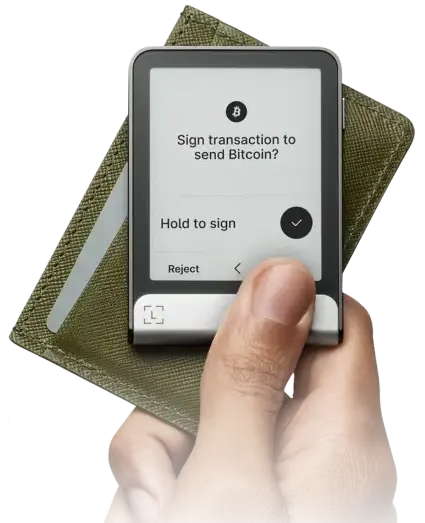
Cold wallets differ from mobile apps and software wallets in that they are offline. The cheapest cold wallets cost from $40 to $50. The most expensive touchscreen cold wallets cost several hundred dollars.
The cost of cold wallets limits their use among small investors. If your crypto portfolio is, for example, $1,000, you should not pay $100 for a cold wallet. You can store a small crypto portfolio in a free hot wallet instead. All popular mobile wallets, browser extensions, and desktop wallets are free.
The strength of a device-based wallet is its security. A cold wallet is the safest way to store cryptos. You should consider using one if your crypto portfolio grows to tens of thousands of dollars.
You can find a comprehensive installation guide for the recommended Ledger Nano X cold wallet on our website.
Crypto exchange as a wallet
The wallets presented in the article so far have been non-custodial. This refers to crypto wallets that are completely under the user’s own control. However, a significant portion of cryptocurrencies is stored on crypto exchanges. This means a custodial wallet. It is controlled by a “custodian,” which in this context refers to a crypto exchange.
It is common for novice users to store crypto in a custodial wallet. This decision is often driven by uncertainty about the new technology. A crypto wallet lets you manage cryptocurrencies yourself and have full control of your assets. However, many people do not want to take on this responsibility because there are no safety nets like those in the traditional banking system.
For example, a crypto transfer made to the wrong address cannot be canceled. If you lose your recovery phrase or become a victim of phishing, your funds cannot be returned. For this reason, especially novice investors find storing crypto on a crypto exchange safer.
Below are the main pros and cons of using custodial (crypto exchange) wallets.
Pros:
- ✅ Suitable for novice investors
- ✅ You can access your account even if you forget your password
- ✅ No need to make transactions
- ✅ No worries about storing recovery phrase
Cons:
- ❌ Cryptos are not under your control
- ❌ Risk of exchange hacking or bankruptcy
- ❌ Access to your account may be blocked
- ❌ Crypto transfers are subject to the exchange’s decisions
If you are a novice crypto investor and want to store your funds on a crypto exchange, we recommend using the most popular services in the market, such as Binance, Coinbase, and Crypto.com.
Non-custodial wallets for crypto exchanges
A new type of wallet has emerged in recent years: a non-custodial wallet created by a crypto exchange. Such wallets are mostly mobile apps. Almost all of the largest crypto exchanges have released their own wallet app. Popular wallets include Binance Web3 Wallet and Coinbase’s Base Wallet.
Below is an example of Crypto.com’s mobile apps in the Apple App Store. You can find both the official Crypto.com app and the Crypto.com Onchain wallet there.
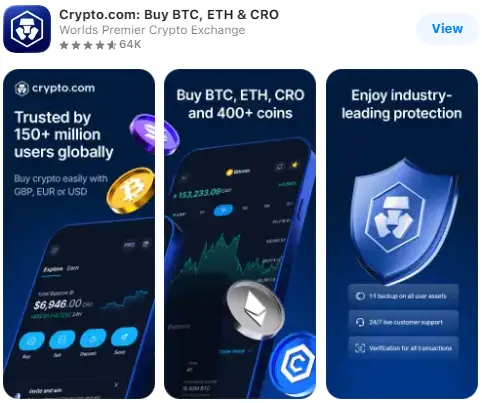
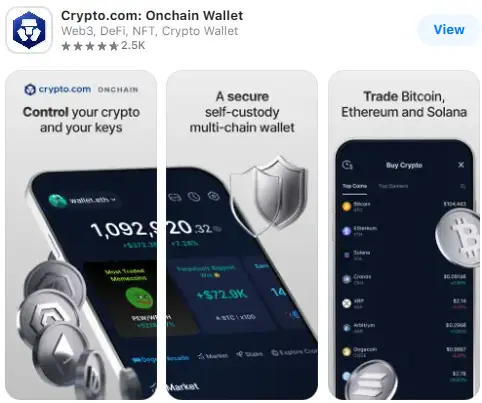
The mobile wallet of a crypto exchange works similarly to Trust Wallet or Exodus. The crypto exchange wallet is also non-custodial, meaning you retain full control over your funds.
However, a crypto exchange wallet should not be confused with a crypto exchange mobile app. A crypto exchange’s mobile app is the interface for your account on that exchange. Using a crypto exchange as a wallet is explained in more detail in the previous chapter.
Why use a wallet published by Binance or Coinbase instead of an independent manufacturer?
A wallet published by a crypto exchange may include functions integrated with the exchange. For example, transferring funds to your own Binance wallet may be easier and faster than transferring funds from Binance to an Exodus wallet. Crypto exchanges may also have greater resources to develop additional wallet features.
It is important for a novice user to distinguish between a crypto exchange’s mobile app and its custodial wallet. Smaller crypto exchanges typically don’t offer a separate wallet app.
Buying crypto from wallets
Crypto wallets and crypto exchanges have traditionally been simple to distinguish in their operation.
- 💵 Cryptos are bought from a crypto exchange
- 📱 Cryptos are stored in a crypto wallet
In recent years, the line between an exchange and a wallet has begun to blur. This is because popular crypto wallet apps also support purchasing cryptocurrencies.
Should crypto investors buy crypto directly from a wallet app instead of an exchange? Let’s look at these options next.
Buying crypto directly from a wallet is usually done by credit card, Google Pay, or Apple Pay. The purchase is made through a third-party integration, and the associated costs are often high (several percent). In addition, the maximum purchase amount and the selection of available cryptos are typically limited.
Alternatively, you can make a bank transfer of tens or even hundreds of thousands of dollars to a crypto exchange – for free. After this, you can buy cryptos from the exchange with very low fees (starting at less than 0.1%).
Buying crypto from a crypto wallet is primarily for small investors who want to buy small amounts at a time. Such a purchase can make sense in some situations because transferring crypto from an exchange to your wallet always incurs transaction fees. In some cases, small purchases directly to the wallet can be cheaper overall.
The table below summarizes the main differences between a crypto exchange and a crypto wallet in a purchase situation.
| Feature | Exchange | Wallet |
|---|---|---|
| Payment method | Bank transfer, credit card + many more | Credit card, Apple Pay, Google Pay |
| Fees | Very low | High |
| Purchase amount | Nearly unlimited | Very limited |
| Selection | Hundreds of cryptos | Dozens of cryptos |
For most beginners, a crypto exchange is the cheapest and most flexible way to get started, but buying from a crypto wallet can be suitable for quick and small purchases.
A crypto wallet is basically for storing cryptos, while a crypto exchange is for trading. Yet, you can purchase cryptos from a wallet and store them on an exchange if you want to.
Crypto wallet: a summary
A crypto wallet is an app that enables sending, receiving, and storing of cryptocurrencies. There are currently hundreds of different crypto wallets on the market. There are free wallets suitable for beginners as well as physical devices suitable for professional use.
It is important for one to understand that using a crypto wallet is not mandatory. You can always store cryptos on the exchange where you bought them. Many professional investors also store cryptocurrencies on crypto exchanges.
One of the most important features of cryptocurrencies is the ability to manage them without third-party control. Every crypto investor should consider whether they want to miss out on this opportunity.
Crypto wallet apps are nowadays much more than just wallets. The most popular wallets support dozens of blockchains and hundreds of cryptocurrencies. Many wallets also integrate DeFi apps and support crypto purchases.
A cold wallet is the most secure option. Its disadvantage is the device’s purchase price, which ranges from tens to hundreds of dollars. Software-based crypto wallets are almost always free.